Tuesday, 24 November 2009

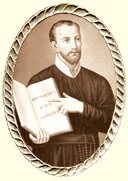
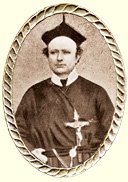
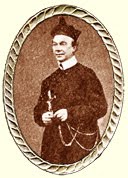
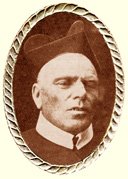
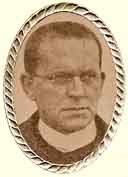
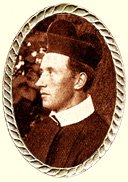
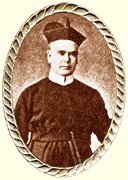
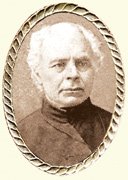
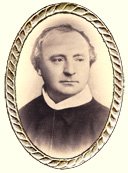
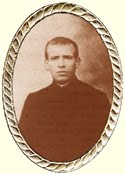
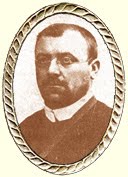
Rev. Fr Edmond Declerq, C.SS.R. (1865-1932)

Father was born at Rebaix, Belgium, on 3 November 1865 and made his religious profession on 4 October 1885. He was ordained to the sacred priesthood on 5 October, 1890.

The unanimous sorrow expressed at his death by the faithful and confreres who had known him was a vibrant testimony of the good accomplished by this valiant missioner who had criss-crossed Belgium during the 40 long years of his apostolate.

Possessed of a truly popular eloquence, he well knew how to make his Missions and retreats profitable in the search for lost souls and in directing the faithful towards solid piety. God alone knows the good he worked.

These consoling results Father Declerq humbly attributed to the Christian formation he had received in his family home and to those who formed him in the religious and apostolic life. But most of all he attributed any success to Our Mother of Perpetual Succour to whom he had a remarkable devotion, and whose cult he had propagated with unceasing zeal.

He hoped for the strength to pursue his apostolate for a few more years but his strength failed him. He had to cease the good fight – for thus was God's Will, and he passed his last days in terrible sufferings which he bore courageously, offering them to Jesus and Mary for the salvation of souls.

Father died at the monastery of Tornai on 22 May 1932 and was buried in the cemetery of Rumillies.

O Mary, Mother of Perpetual Succour, grant to me thy Perpetual Succour, and make me to ask it of thee with cease. †

[From Father's Mortuary Card]

Read more...

Saturday, 21 November 2009

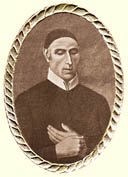
Very Rev Fr Bernard Hafkenscheid, C.SS.R. (1807 – 1865) — Chapter III

Doctor of Theology
and One of the Greatest
Redemptorist Missioners of All Time


Written by Rev Fr M.J.A. Lans
Professor at the Minor Seminary of Haarlem, Holland

CHAPTER III
Summary in English

From the time of their arrival in Rome the two companions sought to be admitted to the Roman College. With the aid of the Camaldolese Cardinal Capellari, the future Pope Gregory XVI and Mgr Caprano, they were speedily found lodgings. Pope Leo XII had greatly at heart the welfare of Dutch students who found themselves in difficulty and he had appointed a priest to take care of them and also offered financial aid for students in difficulty.

They quickly settled into the life of the seminary. The are extant many letters written by Fr Bernard which describe their life in the Roman College. Beelen and Hafkenscheid became ever firmer friends. They also befriended a French advocate and their evenings were often spent in the discussion of various literary works.

The two friends applied themselves very seriously to their studies, appreciating their value, and the value of time, studying, as they were, with around 2000 other young men. Fr Bernard went so far as to write to his parents that the personage whose company he frequented the most was "somebody" called “Thomas Aquinas”. But he did have other interests too – the better writings of de Lammenais before his apostasy, and for recreation the great Italian poet, Torqueto Tasso. Tea was his preferred guide to the Eternal City. During their holidays he and Beeler were able to make several improving pilgrimages.

Fr Bernard's beautiful voice was in much admiration by the college choir – in fact his talent would have led him to the Papal Choir, but for the fact that this office would have required an engagement of 25 years!

His ardent application to his studies was for him the admiration of his teachers and he was regarded as one of the most remarkable students of the Roman College. He obtained the silver medal in Dogmatic Theology for his dissertation against Jansenius' fifth condemned proposition. The medal – one of the most coveted in Rome – was presented to him by the then Jesuit General, Most Rev. Father Roothaan, himself a Hollander. The award was a cause of great rejoicing to the other Dutch students in Rome whose prestige was well boosted by the success of their compatriot.

Father Bernard was also the life and soul of that same student community who were most saddened when their friend "Hafje", as they called him, was not able to be present at their reunions, of which he was the example and the edification.


Chapitre III
Etudes de Bernard a Rome


Dès le premier jour de leur arrivée dans la Ville éternelle, les deux amis se mirent à en parcourir les rues, cherchant la demeure de quelque étudiant hollandais, qui pût les aider à se faire admettre au Collège Romain. Ils surent bientôt qu'ils devaient se rendre auprès du cardinal Capellari (plus tard Grégoire XVI), ou bien chez Mgr Caprano, secrétaire de la Propagande. Leur résolution fut bientôt prise; dès le lendemain ils se présentèrent à l'hôtel du cardinal, munis d'une foule de lettres de recommandation. Son Eminence les accueillit avec bonté et leur dit de se rendre, le jour suivant, chez Mgr Caprano.

Toujours plein de sollicitude pour ses enfants persécutés, le Souverain Pontife avait pris grandement à coeur les intérêts des séminaristes exilés de la Hollande. Mgr Caprano, après avoir reçu nos deux jeunes gens de la manière la plus affable, leur manifesta le désir de Sa Sainteté, Léon XII, que les séminaristes hollandais qui venaient à Rome, poursuivîssent leurs études au Collège Romain; que s'ils n'avaient pas assez de fortune pour se procurer à leurs frais le vivre et le logement, la Propagande leur viendrait en aide et pourvoirait à leurs besoins.
Par une attention délicate, un prêtre, le P. Lacroix, était expressément chargé par le Souverain Pontife de prendre en mains les intérêts des étudiants hollandais. Ce bon prêtre se mit incontinent à la recherche d'une demeure convenable pour ses nouveaux clients, et ce jour-là même Hafkenscheid et Beelen, après s'être fait inscrire comme théologiens au Collège Romain, purent fixer leur tente : Via dell' Angelo custode [1].

Les deux amis prirent, sans tarder, leurs mesures pour atteindre le but qui les avait amenés à Rome. Conduite régulière, peu de rapports avec le monde, fuite des divertissements, zèle persévérant pour l'étude, telles sont les règles qu'ils se prescrivirent, et auxquelles ils se conformèrent ponctuellement durant tout leur séjour dans la Ville éternelle. Il n'y avait encore que peu de temps qu'ils étaient à Rome, lorsque Bernard fit connaître à ses parents son ordre du jour : "Le matin, disait-il, je me lève vers sept heures ... Vers huit heures, nous allons au Collège, qui est éloigné de dix à douze minutes de notre demeure. Cependant, avant d'aller en classe, nous déjeûnons ... La classe dure deux heures et demie et se fait par deux professeurs différents ... L'un est un homme d'environ trente-cinq ans, qui enseigne déjà depuis quatorze ans. Le feu de la jeunesse n'est pas encore éteint en lui. Il joint à des connaissances extraordinaires le talent de les communiquer aux autres. c'est un homme, en un mot, dont je regretterais de devoir perdre une seule leçon. Les études au Collège Romain sont des plus fortes. Je ne doute nullement que je ne passe avec beaucoup de fruit les quelques années que j'espère séjourner à Rome.

"Le Collège Romain est compté à bon droit parmi les plus grands édifices de la cité. On y instruit la jeunesse depuis l'ABC jusqu'à la théologie. On commence par le latin et l'on finit par la théologie, de manière que le nombre des étudiants, grands et petits, qui se rencontrent tous les jours, à la même heure, quoique dans des salles diverses, s'élève à peu près à deux mille. Oui vraiment, nous sommes fiers d'appartenir à un tel collège.

"Les classes finies, nous assistons à la sainte messe dans l'église attentante au Collège. Oh ! le beau spectacle que ces deux mille jeunes gens agenouillés avec ordre dans l'enceinte de l'église ! Après la sainte messe, les Hollandais s'attendent les uns les autres devant la porte du Collège. Quel bonheur alors de se voir et de s'entretenir quelques moments ! Ensuite chacun se retire en sa demeure et étudie dans sa chambre, jusqu'à ce que la cloche sonne onze heures et demie, heure habituelle du diner ...
"A deux heures après-midi les classes recommencent. Comme le matin, elles durent deux heures et demie. Vers cinq heures, chacun se retire de nouveau dans sa chambre et passe la soirée avec ses livres ...
"Voilà mon genre de vie ordinaire. Maman avait coutume de dire que nous étions des promeneurs ou des voyageurs d'Emmaüs, je voudrais qu'elle nous vît un peu à Rome. Ici nous sommes ensemble nuit et jour; nous mangeons, nous buvons, nous nous promenons, nous étudions ensemble; en un mot, voit-on Beelen ? on voit Hafkenscheid; voit-on Hafkenscheid ? on voit Beelen."

Une amitié si intime entre deux jeunes gens pleins de talents devait nécessairement favoriser d'une manière notable leurs progrès dans les sciences. Ils travaillaient avec une ardeur qui ne se ralentissait point. Des occupations incessantes, écrivait Bernard à ses parents, m'ont empêché presque des mois entiers de songer à la maison paternelle ou à des affaires de famille ... Que s'il se répandait le bruit de quelque nouvelle, je ne le saurais même pas; car durant ces derniers mois, j'ai gardé la chambre, comme un ermite, depuis le matin jusqu'au soir." - Souvent même leurs heures de repos étaient employées à agrandir le cercle de leurs connaissances. Une chambre attentante à la leur était occupée par un avocat français, qu'ils ont dépeint comme "un homme de grand mérite, très honnête et très religieux.” Après avoir consacré, le soir, un temps considérable à l'étude, ils avaient coutume d'aller passer quelques moments avec leur voisin. L'entretien roulait alors sur les ouvrages de Lammenais, de de Bonald et autres; de sorte que cette récréation quotidienne leur était de la plus grande utilité. Par l'entremise de cet avocat, ils firent la connaissance du savant dominicain, de la Marche, et du célèbre théatin, Ventura; ils eurent même plus d'une conversation avec eux. Les relations avec de tels hommes durent nécessairement exercer une influence des plus salutaires sur l'esprit et sur le coeur de nos deux étudiants.

Bernard évitait toute espèce de société, afin de mieux jouir de la compagnie de ses livres. Ses parents lui ayant posé la question suivante : "Quels sont ceux que vous fréquentez ? " Il leur répondit : "Vous désirez que je vous fasse connaître ceux que je fréquente ? Eh bien, permettez-moi de vous dire leurs noms. Un des principaux personnages avec qui j'ai lié amitié, c'est saint Thomas, surtout dans sa "Somme théologique". Du matin au soir, il est en ma chambre, et même sur ma table ! Ce saint Auteur n'est pas facile à comprendre. Cependant à force de temps, je me suis tellement habitué à sa manière de parler, que je m'entretiens bien souvent avec lui jusqu'à minuit. Vous ne sauriez croire combien sa conversation m'est agréable. Jamais je ne le quitte sans avoir appris de lui quelque chose de nouveau. Les jours libres, c'est-à-dire le jeudi et le samedi, il m'arrive de passer plusieurs heures avec Lamennais, qui m'est d'un grand secours dans mes études théologiques, mais surtout philosophiques. (Alors la gloire de Lammenais n'était pas encore ternie par son orgueilleuse révolte contre l'Eglise).

"Vous comprenez bien que je ne m'occupe pas toujours de ces études si sérieures : l'arc ne saurait être toujours tendu. C'est pourquoi je rends de temps en temps une visite au poète italien le Tasse; d'ordinaire nous nous entretenons alors de la "Jérusalem délivrée" par Godefroid de Bouillon. Ce n'est ni de la philosophie, ni de la théologie; mais c'est si supérieurement beau et utile, que souvent je dois me plaindre de ne pouvoir goûter plus longtemps le plaisir d'une telle conversation ... Je fréquente Téa, qui a publié une belle "Description de Rome". Pendant les dernières vacances je lui ai souvent donné le bras, et j'ai vu et admiré sous sa conduite la vieille Rome avec ses monuments.

Que vous en semble ? Ne sont-ce pas là de belles et bonnes compagnies ? Je suis sûr qu'on ne pourrait former à Rome de meilleures liaisons. Aucune liaison avec quelque romain que ce soit, ne saurait être mise en parallèle avec les miennes. Je pourrais facilement, si je le voulais, être chaque soir dans telle ou telle société; mais je n'y tiens nullement. Je cherche des compagnies qui puissent m'être utiles pour l'esprit et pour le coeur.

"Peut-être fréquenté-je quelques savants ? - Ah ! oui; il y en a cinq ou six, qui me témoignent une grande affection. Ce sont mes professeurs, avec qui je puis converser aussi souvent et aussi longtemps que je le désire. Eux exceptés, je ne connais presque personne ... mais aussi je n'ai, à proprement parler, besoin de personne. Mes professeurs, mes livres, mes compagnons d'étude, hollandais et romains, sont pour moi la société la plus agréable que je puisse et doive fréquenter. Déjà depuis deux ans je converse avec eux, et je continuerai à m'attacher à eux tout le temps qu'il me reste à passer ici. Personne, hormis eux, ne saurait me procurer des médailles et des grades. (Comme nous le verrons bientôt, au moment où il écrivait ces lignes, son application à l'étude avait déjà été couronnée). Un travail non interrompu, voilà le seul moyen d'avancer et de faire des progrès qui méritent récompense. C'est à Rome que je suis devenu un peu philosophe, comme on dit vulgairement, et j'espère le devenir encore davantage ... C'st pourquoi nous sommes presque toujours dans nos chambres, étudiant de toutes nos forces, sans nous soucier beaucoup de ce qui se passe à Rome ou ailleurs. En vivant de la sorte, je crois vivre comme il faut, et acquérir l'esprit de l'état que j'ai choisi et que j'espère embrasser un jour".

Le temps des vacances était, pour lui et pour son ami Beelen, un temps de repos que tous deux savaient encore mettre à profit. Souvent alors ils faisaient ensemble un voyage dans l'une ou l'autre partie de l'Italie; ils visitaient les sanctuaires célèbres si nombreux sur cette terre éminemment religieuse. Mais s'ils restaient à Rome, les livres n'étaient pas absolument abandonnés. "Vous ne manquerez pas de me demander, écrivait encore Bernard à ses parents, comment il m'a été possible de passer deux mois dans les loisirs des vacances; écoutez combien ce fut pour moi chose facile ... Le matin, je m'occupais à achever quelques traités que les vacances nous avaient fait interrompre; j'avoue que, assez souvent, je devais cesser le travail pour recevoir la visite de l'un ou l'autre ami, qui certes était toujours le bienvenu ! Plus d'une fois, je fis à ces amis le reproche qu'ils me dérangeaient trop rarement. Vers midi, nous nous rendions au restaurant, ce que je n'oubliai jamais de faire; car sachez que, si jamais je deviens aussi ponctuel pour tout le reste que pour ce point-là, je rentrerai dans la patrie comme un modèle de régularité. Après le repas, se faisait la promenade soit à l'intérieur de la ville, soit au dehors; et au coucher du soleil, nous étions rentrés au logis. - Mais les soirées, comment les passions-nous ? - Oh ! fort agréablement. D'ordinaire je faisais une lecture amusante dans quelque poète italien. Ensuite nous allions souper; et alors nous avions des entretiens si animés sur je ne sais quelles matières, que la fin du repas coïncidait bien souvent avec le temps du coucher. Vous voyez que cette façon de vivre ressemble fort à celle d'un rentier ... Et cependant cela ne tarda pas à me devenir ennuyeux".

Peut-être plusieurs de nos lecteurs se feront-ils cette question que Bernard lui-même mit un jour dans la bouche de ses parents : "Quelles étaient donc les récréations favorites de notre jeune étudiant à Rome ?" - Précédemment déjà nous avons dit que, dès son bas âge, Bernard avait eu un grand attrait pour la musique. A Rome, la musique "devint chaque jour sa grande et pour ainsi dire, son unique récréation au milieu de ses études." Aussi était-il souvent question dans ses lettres de la musique qu'il avait entendue à Rome, et il savait l'apprécier avec un goût exquis. Grande était sa joie lorsque, assis au piano, il exécutait avec ses amis les pièces de musique qu'on lui envoyait d'Amsterdam; lorsqu'il parcourait avec eux cette magnifique "Création" de Haydn, qu'il comparaît à une source capable d'étancher complètement la soif de la musique. Il avait fait connaissance avec un prélat romain, qui, contraint par son âge avancé de renoncer à la musique, avait mis son piano à la disposition de Bernard de son ami Beelen et de l'avocat français. Ceux-ci profitaient habituellement de cette offre bienveillante le jeudi, qui était pour eux un jour libre, ainsi que nous l'avons vu.

Une autre occasion de satisfaire son amour de la musique s'offrit bientôt à Bernard : on lui donna place, en qualité de soliste-ténor, parmi le petit nombre de chantres choisis dans le Collège Romain pour rehausser l'éclat des cérémonies religieuses qui se célébraient dans l'église de cet établisssement. Chaque dimanche, dans l'après-midi, on faisait dans cette église le catéchisme aux élèves du Collège; ensuite le choeur exécutait les plus beaux chants italiens et latins. Ce fut à ce propos que Bernard écrivit un jour : "La musique que nous exécutons est si belle, si magnifique, que je goûte de vraies délices à chanter à l'église." La beauté, la sonorité de sa voix fut bientôt remarquée; on accourait en foule à ses réunions, afin d'entendre ce "Cantore olandese", et les Italiens se disaient souvent pleins d'admiration : Che bellissima voce! Che bellissima voce ! (Quelle belle voix ! Quelle belle voix !). Après une épreuve qu'il subit avec succès, Bernard fut même admis à concourir pour l'office de chantre pontifical; mais, à son grand regret, il lui fallut renoncer à cet honneur, lorsqu'il eut appris que personne ne pouvait être admis comme membre de la chapelle pontificale, à moins de s'engager à en faire partie pendant vingt-cinq ans [2].

Une application aussi assidue, un zèle aussi persévérant pour se perfectionner dans les sciences qu'il était venu étudier à Rome, tout en assurant à notre séminariste une large part dans l'amour et l'estime de ses supérieurs, ne pouvaient manquer d'obtenir les plus heureux résultats. Aussi, d'après le témoignage même de ses maîtres, Bernard fut-il un des élèves les plus remarquables du Collège Romain; il avait d'ailleurs avec lui la bénédiction divine qu'il implorait chaque jour, et qui lui préparait d'éclatants triomphes.

Le jeune Hafkenscheid n'était encore qu'à la fin de sa première année d'étude dans la Ville éternelle, quand une dissertation "de seria Dei voluntate salvandi omnes omnino homines [3]," dissertation dirigée contre la cinquième proposition condamnée de Jansénius, lui valut la médaille d'argent en théologie dogmatique. Nous ne résistons pas à l'envie de reproduire presque intégralement la lettre qu'il envoya à ses parents pour leur annoncer ce triomphe. On y voit briller une noble fierté, une joie candide, une vive satisfaction, qui prenait en partie sa source dans la pensée du bonheur qu'il allait procurer à sa famille; son caractère s'y révèle mieux que nous ne pourrions le révéler nous-même.

"Assurément vous avez déjà reçu de moi des lettres qui vous ont été agréables, et qui ont réjoui votre coeur. Cependant, j'en suis sûr, autant que je suis sûr que le Pape est à Rome, jamais vous n'en avez reçu d'aussi agréable que celle-ci. Réjouissez-vous, bon père, bonne mère; réjouissez-vous, bien-aimés frères et soeurs, et vous aussi, amis et connaissances. Mais toutes vos joies réunies ne seront pas encore à l'unisson de la mienne. Quelles agréables surprises nous sont parfois réservées ! Oh ! la soirée du 5 de ce mois (septembre 1829), quelle soirée ! Tous les Amsterdamois, tous les Hollandais d'ici en furent comme hors d'eux-mêmes ! - Mais qu'est-ce donc qui nous a tant réjouis ? - Quelle question ! - Qui donc, je vous prie, ne se serait pas réjoui d'avoir remporté le premier prix de théologie dogmatique, la médaille ? Etre le premier Hollandais qui remporte le premier prix à Rome, au Collège Romain ! N'y a-t-il pas là sujet de se livrer à l'allégresse ? ...

"Le 5 de ce mois, à quatre heures après-midi, eut lieu la distribution des prix. Un brillant orchestre prit place dans l'église, devant l'autel, au milieu de décorations et de draperies de tous genres. Peu s'en fallut que je ne vinsse pour cette circonstance en tenue ordinaire, tant je songeais peu à recevoir le prix d'honneur. A l'arrivée du Général des Jésuites, suivi de tous les professeurs et d'autres personnages invités à la cérémonie, l'orchestre entonna une symphonie telle que l'église en fut comme ébranlée. Le R.P. Roothaan [4], qui présidait, ayant pris place au milieu de l'église sur un trône élevé et tendu de rouge, un des professeurs prononça un discours; après quoi un étudiant de la Compagnie de Jésus monta dans la chaire superbement ornée, pour proclamer les noms de ceux qui, cette année, avaient remporté les prix. Voilà que mon nom est proclamé ! ... Comment ce jésuite parvint-il à prononcer si bien nom si barbare ? ... Conduit par un Père jésuite, je fus présenté au Général, et là, moi, amsterdamois, je reçus de la main d'un compatriote la médaille d'argent ! Lorsque je l'eus reçue, l'orchestre se mit à jouer une pièce tellement animée, tellement gaie, que reconduit par le même jésuite, j'allai presque en dansant occuper la place de distinction destinée aux lauréats ... Mais tout n'était point terminé. A peine fûmes-nous sortis de l'église, que mes condisciples hollandais se cotisèrent pour célébrer cet évènement en grande pompe. Hier soir, ils sont venus me trouver dans ma chambre au nombre de neuf. Nous bûmes du thé hollandais, nous fûmames une pipe hollandaise. Vous nous connaissez assez pour deviner ce qui se passa entre nous ce soir-là. Vraiment, nous n'avons jamais passé à Rome une soirée aussi joyeuse. - "J'éprouve trop de joie pour vous parler d'autre chose. Quelle nouvelle, après tout, pourrais-je vous annoncer qui eût quelque intérêt, après cette nouvelle unique dont je m'empresse de vous faire part ? "

Pour juger de la satisfaction qu'éprouvèrent en cette circonstance les étudiants hollandais, et de la franche cordialité avec laquelle ils applaudirent au triomphe de Bernard, il suffit de lire l'extrait suivant d'une lettre écrite par l'un d'entre eux: "Vous savez qu'à la fin de l'année scolaire, c'est la coutume dans notre Collège, d'assigner l'un ou l'autre point choisi dans les traités étudiés précédemment. Le point assigné est la matière d'une dissertation à faire "sine ullo librorum adjumento.

Ad scholas veniant instructi cum charta et calamis tantum. [5]"
"Outre les scholastiques des Jésuites et les élèves du Collège Germanique, tous les élèves du Collège Romain qui ont suivi, durant l'année, les leçons de théologie, sont admis au concours. Eh bien, dans une de ces dissertations, la médaille a été gagnée par qui ? - Par notre ami Hafkenscheid, qui l'a obtenue, proecedentibus nequidquam Italianis [6]. Que vous en semble ? Cela seul vaudrait presque la peine de venir à Rome. Il faut que cette dissertation ait été conduite avec beaucoup d'intelligence. Je me réjouis de ce que les Amsterdamois ont fait, dès la première année, si belle figure à Rome. Cette médaille suffit à elle seule pour établir la réputation de toute la colonie hollandaise. Nous avons célébré entre nous cette victoire amsterdamoise d'une manière fort joyeuse. Nous nous sommes aussi concertés, et nous avons décidé comment nous nous y prendrons l'année prochaine, si pareil cas se présente de nouveau parmi nous."

Que personne ne s'avise de blâmer ces démonstrations cordiales, ce naïf enthousiasme, non plus que ces parties de plaisir qui réunissaient souvent, surtout pendant les vacances, nos jeunes étudiants hollandais, soit à l'occasion d'un repas commun, soit à l'occasion d'une soirée amusante. L'Eglise ne prétend nullement retrancher toute espèce de récréation aux jeunes gens qu'elle prépare au sacerdoce, ni les obliger à une gravité qui dépasse la mesure de ce que comporte leur âge. Une franche gaité, la fréquentation de quelques amis d'un commerce agréable, peuvent s'allier fort bien à un zèle infatigable pour l'étude et à des efforts soutenus pour la pratique de la vertu. Ce n'est point à tort que Bernard écrivit un jour : "Où est l'homme qui, devant chaque jour se livrer à des études sur Dieu et les attributs divins, ne se permettra pas volontiers de temps en temps quelque délassement agréable ? A la vérité, je suis devenu un peu plus sérieux; cependant, quand l'occasion se présente, je suis encore le même qu'auparavant. Demandez-le à mes compagnons; tous vous diront, j'en suis sûr, qu'il en est ainsi."

En effet, les témoignages de ses condisciples, que nous avons pu recueillir, certifient que Bernard était l'âme et la joie du cercle des jeunes Hollandais, et que leur entrain perdait beaucoup quand "Hafje" (c'était ainsi qu'on le nommait par abréviation) était absent. Lorsque parfois ils faisaient au nombre de dix à douze, une petite excursion de vacances, c'était lui qui réglait tout, qui avait soin de tout, qui déterminait la route à parcourir; et chacun alors de le suivre comme le meilleur des guides. Ces délicieuses réunions ne contribuaient pas peu à fortifier chaque jour davantage les liens d'amitié qui unissaient le groupe des étudiants hollandais. Elles les détournaient de certains divertissements qui eûssent été nuisibles à leurs études; elles leur procuraient l'occasion de jouir largement, quoique d'une manière toujours innocente, des récréations du jeune âge, et aussi de s'édifier par de mutuels exemples de vertu. Tantôt ils s'entretenaient de leurs familles respectives, se transportant ainsi en esprit au foyer domestique; tantôt ils traitaient l'une ou l'autre question concernant leurs études. Il n'était pas rare qu'ils évoquassent le souvenir de Hageveld, des joies qu'ils y avaient goûtées, de l'affection dont ils y avaient été l'objet, et alors revenait toujours ce voeu cher à leurs coeurs : "Plaise à Dieu que bientôt les efforts de notre vénéré et bien-aimé régent soient couronnés de succès, et que les séminaires ouvrent de nouveau leurs portes aux catholiques hollandais !" La Providence divine qui dirige tout avec une sagesse admirable, les exauça au delà de leurs demandes. †
[Typed by Mr Aime Dupont of Flanders]

Footnotes
[1] Vicino alla Fontana Tresi, n° 89.
[2] La chapelle pontificale date du temps de saint Grégoire le Grand. Ses membres sont placés sous la surveillance du Pape et ne chantent que devant lui. Tous leurs statuts sont sanctionnés par des décrets pontificaux. C'est un fait notoire que les Hollandais ont été, pendant de longues années, la gloire de cette chapelle.
[3] De la volonté sincère de Dieu de sauver absolument tous les hommes.
[4] Le R. P. Roothan, alors Général de la compagnie de Jésus, était également natif d'Amsterdam.
[5] Sans l'aide d'aucun livre. On n'apporte en classe que des plumes et du papier.
[6] A ce propos on ne lira pas sans intérêt une note qui nous est communiquée par Mgr. Bogaers, un des condisciples de Bernard, actuellement doyen de Cuick (Hollande).
“J'ai encore entre les mains, dit l'auteur de la note, la liste authentique de la distribution des prix au Collège-Romain en 1829. J'en extrais ce qui suit :

Prix décernés aux élèves de Théologie.
Pour la classe du matin :
1er Prix – Vincent Pecci (aujourd'hui Joachim).
2me Prix – Jean Corley.
Accessit – Bernard Hafkenscheid.
Pour la classe du soir :
1er Prix – Bernard Hafkenscheid.
2me Prix – Vincent Pecci.
Vincent, ajoute Mgr. Bogaers, était le nom de baptême de Sa Sainteté Léon XIII. Il le changea, suivant l'usage d'Italie, lorsqu'il fut nommé nonce à Bruxelles.
Parmi les brillants sujets du Collège Romain à cette époque, il faut encore citer Mgr Vecchiotti, qui obtint le premier prix de théologie en 1831, et qui fut plus tard internonce à La Haye.

Read more...

Wednesday, 18 November 2009

Rev. Fr Joseph DeMeester, C.SS.R. (1862-1939)

Father DeMeester was born at Roulers, Belgium, on 29 August, 1862 and made his Holy Profession on 15 October, 1882. He was ordained to the Sacred Priesthood on 8 October, 1888.

He was a great and very popular Redemptorist Missioner. His sermons – simple in form but rich in depth, and delivered with an uncommon warmth and conviction, made him a particularly sought after orator.

In the course of his apostolic career which spanned nearly half of a century he preached 1170 Missions and retreats. His varied eloquence touching all classes of persons. Because of his talent for preaching it was his task over many years to introduce his younger confreres to the art of sacred oratory.

He was the director of the Association of the Holy Family as well as the Work of the Foreign Missions. The latter was particularly dear to him and he spread it with a zeal to which many a Missioner rendered homage.

But above all Father DeMeester was a man of prayer. Death, which came on him suddenly at Jette on 10 January, 1939, did not find him unprepared.
[From Father's mortuary card.]

Read more...

Tuesday, 17 November 2009

Rev. Fr Henricus Ducarmois, C.SS.R. (1862-1939)

Father Ducarmois was born at Ronser, Belgium, on 21 October, 1875, and made his profession on 5 October, 1893.

He was ordained a priest on 4 October 1901 and left for the Congo Missions on 26 March, 1905. True to the voice of God that he had heard, Father consecrated himself wholeheartedly to the Congo. His strapping health and his burning zeal for souls seemed to signal to all a long and fruitful life. But God willed otherwise and wished to call him unto Himself. He was to die within 5 months at the Mission of Kinkada on 15 July, 1905.

The harvest is indeed plentiful but the labourers are few. Leave thy land and thy people, saith the Lord, and come out of the house of thy father and come into the land that I will show you. †

[From Father's mortuary card]

Read more...

Tuesday, 13 October 2009

Novice Brother Baudouin De Ridder (1889-1914)

Brother Baudouin was born in Assche, Flanders on 5 January, 1889. At his Baptism he was given the name Guillaume. He passed from this world unknown to it, in a most humble manner on 22 November, 1914, at Beauplateau.

But his soul was known to God and became one of those whom God not only takes unto Himself by a religious vocation - but also in his case - by a premature death.

As he prepared himself for religious life - to which he desired so ardently to consecrate himself - the young novice edified his confreres in the faithful and joyful accomplishment of his daily tasks: loving to be able to speak of the Good God - and loving above all to be able to give to prayer all the moments of his day which were left free after work.

God, Whose judgements are unfathomable but always merciful, judged him ripe for Heaven. God sent him death when nobody dreamed that it could happen. He was remembered for his love of Our Blessed Lady, which calls to mind the words of St Alphonsus:
"O Mary, when one dies loving thee, salvation is assured!"

Sweet Jesus, grant unto him eternal rest. †

(From Brother's mortuary card.)

Read more...

Friday, 9 October 2009

Very Rev Fr Jozef Ghekiere, C.SS.R. (1890-1940)

Father Ghekiere was born at Iseghem, Flanders, on 10 April 1890. He made his Redemptorist profession at St-Trond on 24 May 1908, and was ordained to the sacred priesthood at Essen on 29 June 1916.

He had a warm and simple Flemish nature, which, unacquainted with flattery and pretence, made him faithful to his duty, and full of zeal for those souls entrusted to his care. Interiorly he wept over his own exile and that of others from Ukraine.

He was a loving soul under a somewhat rough appearance. He had been a missionary for the Ukrainians in Canada, Volyn and Galicia. In Canada, he was the superior of Komarno, where he looked after 40 parishes. He gained the esteem and admiration of all. In Volyn, he finished the building of the monastery of Kowel, the first in what was formerly Russian controlled territory. After that he was appointed as Rector of the House of Studies in Holosko near Lviv. There he was surprised by the war. During the eight-day bombardment he stood up for the well-being of all his confreres. All of them were saved, but were exiled.

After much suffering he returned to Flanders upon the request of his Superior. An infection in his veins, caused by great travel fatigue, caused him to stay in bed. A blood clot caused his unexpected death at the Redemptorist Monastery in Brussels on 21 January 1940.

God had accepted his sacrifice! Without doubt, it will bear fruit a hundred fold.†

[From Father's Mortuary Card]

Read more...

Wednesday, 7 October 2009

Very Rev Fr Bernard Hafkenscheid, C.SS.R. (1807 – 1865) — Genealogy

Fr Bernard's Genealogy

A distant nephew of Fr Bernard Hafkenscheid, Mr Maurits Hafkenscheid, has put up an interesting website which catalogues the genealogy of Fr Bernard himself. The site can be found at http://www.hafkenscheid.com/
The site explains that the Hafkenscheid family (Hafke = Habicht = havik = hawk, Scheid = Flurgrenze = borderline between estates) has taken its name from the former Havkenscheid castle in the hamlet of the same name near Bochum, Westphalia. In 1340 Deitrich von Havekenscede was vassal of this castle and is the ancestor of a family that has held it in fee until the seventeenth century. There are several indications that his family is connected to that of Fr Bernard.

The ancestors of the family came to Ulft, the Netherlands, under remarkable protection of the Hohenzollern-Sigmaringen family, to which the Count of Bergh belonged. Joannes Fredericus Hafkenscheid, the oldest ancestor in the family file on this site, was employed by the Count of Bergh and was made viscount of the House of Ulft in 1691.

The coat of arms depicts a hawk on top of a hill. The official description (in Dutch): "Schild: in goud op een heuvel van sinopel staande een havik van natuurlijke kleur, met opgetrokken rechterpoot, de vleugels in vlucht. Helmwrong dekkleden en vlucht: van goud en sinopel".

The site is divided into generations. Fr Bernards "spreadsheet" we give below:
While the site is probably relevant only to scholars of the great Missioner, still the fact that it gives some mortuary cards of relatives is a rather unique and personal resource in reference to the life of this Father which we are serializing. Also much of that life in the early chapters is drawn from letters written home by Father as a seminarian to the reading of which we are told all the members of the direct and even extended family and friends were invited by his father, Michael. Thus these are the people who were there and followed the career of their great uncle.

Below are the mortuary cards of Father Bernard's parents and brother. They tell us that his father, Michael, died in Amsterdam on 28 September (the vigil of his name's day) 1846 at the age of 74 and that his mother followed him 5 years later on 23 January, 1851. Fr Bernard must surely himself have had a copy of this card. That of his brother Christiaan is captioned with the interesting heading "Jesus, Mary, Joseph" which is common enough but to which is added also "Thaddeus" in honour of the holy Apostle and helper of the helpless, St Jude Thaddeus. It tells us that he, a doctor, died in 1899, that is 34 years after Fr Bernard. The final image we have reproduced is of Father's niece Maria Johanna who died at the age of 28. The only other direct family photograph given on the site is of her and she died in 1852, so once again Fr Bernard would have been aware of this sad death. †

Read more...

Saturday, 3 October 2009

The Servant of God Fr Giuseppe Maria Leone, C.SS.R. (1829-1902) Enlarged

(Here follows a more extensive necrology of the Servant of God than previously published.)

The Servant of God, Fr Giuseppe Leone, was born to Nicola Francesco Leone and Rosa di Biase in Trinitapoli, Bari Italy on 23rd May, 1829. He was baptized the following day in the parish church of St. Stephen Protomartyr, and on 1st May 1833 he received the Sacrament of Confirmation from the Archbishop of Trani.

As a child Giuseppe, though restless and lively, demonstrated piety and a tender love for Mary and for Jesus in the Most Holy Sacrament of the Altar. One of many boys in his family, Giuseppe Maria was a joy to his parents, always affectionate and willing to follow their guidance. He had remarkable gifts of intellect and memory, demonstrating much wisdom even in his youth.

At thirteen years of age he entered the diocesan seminary in Trani. Giuseppe had already experienced the loss of his mother, and one night he saw an apparition of Our Lady. She assured him that she intended to take him into her care, saying "You are mine."

Thereafter he decided to embrace a more perfect vocation and become part of the Redemptorist Order. Using the excuse of going to the feast of the patron of the nearby town of Cerignola, he went to visit the Redemptorists with high hopes of joining their Congregation. However, due to the delicate condition of his health, he was refused by the superiors of the Institute.

Giuseppe did not give up hope, and eventually through steadfastness and prayer, he received an invitation from the Redemptorists to come to Nocera dei Pagani that his vocation might be considered. After a favourable interview, the Superior General approved his request to join the order, but only after he obtained the approval of Nicola, his father. This approval was not granted to Giuseppe at first, because it had always been his father's desire that his son should become a secular priest.

Upon his return home, his father was adamant and even refused to allow him into the house. Giuseppe went to a monastery of Andria where he remained for about two months, in the midst of prayers and tears, hoping to obtain from God a change in his father's will. Eventually, however, the continuing battle with his father and his relatives caused him so much dismay, that the poor young man fell prey to a serious case of malaria.

Then, in the midst of such misery, he experienced a vision of Jesus under the appearance of a youth, full of gentle majesty. He was filled with the feeling that, although all of his family was against his vocation, Our Lord was in favour of it. Just a few short days after that comforting vision, Giuseppe got up out of bed perfectly healed and unexpectedly received the consent from his father and the approval of everyone else who had previously opposed his request.

At the age of 21 years in 1850, Giuseppe Maria Leone was clothed as a Redemptorist and the year after he made his Profession. Initially he was sent to complete his studies in Iliceto, but later in 1852 he moved to Vallo de Novi because the conditions of the area were more suitable to his health, and there he completed his studies. In 1854 he received the long-awaited ordination to the priesthood.

His ordination changed his life deeply and supernaturally. Considering that his regular studies were incomplete through reasons of ill health, his ability to interpret Holy Scripture and Patristics was considered miraculous. He was unable to join the Missions and was instead continuously occupied with the Spiritual Exercises for priests, religious and seminarians.

Under the law of suppression in 1865 he was forced to return to the family home in Trinitapoli, where he soon gained the esteem of all. There he was appointed director of the congregation of the church of St. Joseph, where he spent long hours in the confessional hearing the confessions of the women. However, the men felt more at ease going to confession at his house, which was often filled with penitents, especially in the time of Lent, when the stairs and hall were often crowded to overflowing.

It became widely known that he could see what lay in people’s hearts and consciences. Father Leone was chosen by nearly all the priests of the surrounding country as their confessor and as the spiritual director of their consciences. He would talk to Mary with real familiarity, and she would often appear, consoling or inspiring him and also dictating entire sequences of the many books that he was to write. He was known to have the gifts of prophecy and bilocation, and was revered by all as a saint.

Events occurred which could only be explained by Divine intervention, and these served to increase the esteem and confidence of the people in their holy confessor. One well known incident took place when the house of the Servant of God was full of people waiting for confession. All of a sudden Father Leone got up, and going out into the midst of all the penitents, he said, "Whatever happens, do not be afraid, I am with you." Not ten minutes later, the strong jolt of an earthquake was felt, shaking the entire house. He calmly smiled and encouraged everyone, inviting them to resume their preparations for confession.

In 1867 cholera broke out in Trinitapoli resulting in many deaths among the people. The disease reached epic proportions, and about thirty people were dying daily. Father Leone, though suffering himself, worked to relieve those affected by the disease. He proposed that the population of Trinitapoli should seek the intercession of Our Lady of the Sacred Heart and asked the people to have recourse to her with confidence The people responded with genuine enthusiasm, and began a novena.. At the end of the novena, the cholera disappeared miraculously.

Grateful for such a wondrous response from heaven, Father Leone gathered a collection from the citizens to procure a statue of Our Lady of the Sacred Heart from artisans in Naples. The statue came towards the end of that year, and was accepted by the people with great enthusiasm. This statue was later known as the Madonna of Father Leone, or the Madonna of Cholera.

It was during the cholera epidemic that the Servant of God lost his father. Old Nicola, already advanced in years, was struck by the disease. He died in the arms of his son without anguish, giving up his soul to God. After his death, Father Leone continued to reside in the family home, along with his older brother's family.

In 1877, he became seriously ill, so much so that doctors had given up on his recovery. But all of a sudden, against all odds, he recovered completely. He attributed this to a very special grace of Our Lord, which seemed intended to prolong his life so that it could be the spent for the salvation of sinners. Afterwards, Father Leone not only continued his apostolate of prayer and works for salvation more intensely, but he also offered himself as a victim soul to expiate the sins of others.

His suffering, in fact, did increase more and more, and became an unremitting martyrdom. His pains would grow stronger during the periods in which people gave in more easily to the temptation to sin, as in times of carnival, holidays, etc. Then his sufferings increased so much that it seemed he was near death.

In 1880, Father Leone was called by Superior of the Congregation to move to Salerno. He was ready to obey, and was sadly resigned to go to his new assignment. But the people who loved and venerated him as a saint, did everything possible to restrain him, and at the time of his departure, with tears in their eyes, accompanied him to the train.

He remained in Salerno for the remaining 22 years of his earthly life. There, despite being tested physically by his sufferings, he continued to engage in apostolate works. The fame of his holiness spread everywhere. Wonderful was the good that by his word and example was produced in the souls consecrated to God. From all sides came the faithful came to confess to him, to ask for advice, seeking the comfort of his words and his prayers. Those who could not meet with him in person, wrote letters to which he replied with great kindness and patience.

He soon became the confessor and spiritual director Dr. Bartolo Longo and his wife, founders of the Shrine of our Lady of the Rosary in nearby Pompeii. For twenty years, while remaining on the side-lines, Father Leone was one of the main architects of the religious works connected with the miraculous image of Our Lady of Pompeii. Besides guiding the construction of the great church, he was the soul and the inspiration of the many initiatives undertaken at Pompeii to promote the Rosary, to support religious vocations, and to provide for the newly established orphanage.

Father Leone had lived such an intense and fruitful life, and had become so physically exhausted from continual suffering, that the faithful were kept in constant apprehension for his life. However, to their surprise, he always remained calm and serene, and brought forward the work entrusted to him by the Divine Will, until it came to the time marked by God for him to go to receive the reward of his virtues.

Rich in merit and years, and mourned by all, he ascended to God on the 9th August 1902, at the age of 74. The graces received through his name have been numerous. The body of this Servant of God was buried in the cemetery of Angri and then in 1920, on the 13th October, he was moved to Pagani and laid to rest in the chapel of the Redemptorist Monastery, where St. Alphonsus’ mortal remains had reposed for several years. †
Photo credit to Santi e Beati

Read more...

Saturday, 26 September 2009

Rev. Fr Jozef Butaye, C.SS.R. (1877-1927)

Rev. Fr Butaye was born in Roeselare, Flanders, on 16 June, 1877, made his vows at Saint-Trond on 8 October, 1899, and was ordained to the Sacred Priesthood at Beauplateau on 25 September, 1904.

To save souls! To bring abandoned souls to Jesus the Redeemer — such was the life-long dream of Father Butaye. For this reason he became a Redemptorist, joining St Alphonsus the great missioner to the abandoned. For this reason he went to the Congo where he spent 8 years in very fruitful labour for the salvation of the many souls whom he brought to the knowledge Our Lord.

His health, broken down by work and self-sacrifice, he had to be sent home to Belgium, but he never forgot his beloved Congolese. In between his apostolic duties he consecrated his strength to his beloved work of the foreign missions through the raising of funds, slide presentations, and the spreading of books and cards about the work in Africa.

He often expressed the wish that he would die at his work and his desire was fulfilled. During a mission presentation at the Minor Seminary of Roeselare his strength suddenly gave way. He looked death calmly in the eyes, receiving the Last Sacraments very devoutly, and peacefully rendered his pure soul to God.

His last words at that conference were to have been about the eternal meeting and kiss-of-peace of the missionary with Our Lord in Heaven — a kiss-of-peace we may hope that he himself received in his Heavenly fatherland.

He, the missionary who had always such a childlike devotion to Our Blessed Mother, died in the town in which he was born, Roeselare, on the Feast of Our Lady's Assumption, 15 August, 1927. †
(From Father's mortuary card.)


Read more...

Friday, 25 September 2009

Rev. Fr Gerard Debo, C.SS.R. (1857-1928)

Rev. Fr Gerard Debo was born in Courtai, Flanders on 1 December, 1857, pronounced his religious vows on 15 October, 1876, and was ordained to the Sacred Priesthood on 19 October, 1881. That which especially characterized this Father, and which made him so kind towards all those who approached him, was above all an unmistakeable goodness, devotion and desire to serve beyond the realms of ordinary duty. To render service was his passion - it was the breath of his life. "To serve God and souls," was his motto. In this noble cause his consecrated his life and for the same he lost that life because it was in going about his duty that his end came.

As a true son of St Alphonsus he maintained, as a precious heritage, a tender and filial love towards Our Blessed Mother. How he appreciated the value of his religious vocation! He wrote upon his jubilee souvenir card the words of St Alphonsus: "I exhort you all to cherish your vocation, which is the greatest benefit you have received from God after that of the Creation and Redemption."

Father died at Gaurain on 5 February, 1928. †
(From his mortuary card.)

Read more...

Tuesday, 22 September 2009

Rev. Fr Hippolyte Clement, C.SS.R. (1854-1917)

Father was born at Iseghem on 13 June, 1854 and was admitted to profession on 15 October, 1878. He was ordained a priest on 11 October, 1883.

He was loved by all those who knew him, above all the Belgian Brothers to whom he taught the religious life for the more than 25 years of his charge as Novice Master.

Those whom he instructed at Saint-Trond for 2 years and those at Roulers for 5 where also witnesses of his generous devotion, enthousiastic zeal and his warm sermons.

God gave him a great goodness and amiability of heart. During the 17 years of his work at Beauplateau in the charge of "Minister" or better-put as "Visible Providence" he rendered incomparable service to his Congregation. His unexpected death was to throw his superiors, his dear novices, and all his confreres into an unexampled consternation.

"Forget, if you will, my books and my conferences," he would say, " as long as when they are gone there is left in you a particular devotion to the Blessed Sacrament." He desired from his novices the love which he himself bore to such a high degree for the Rosary.

Father died suddenly at Beauplateau on 18 February, 1917. †

Read more...

Saturday, 19 September 2009

Rev. Fr Jules De Ryck, C.SS.R. (1880 - 1955)

Father was born at Herzele, Flanders, on 18 December, 1880 and was admitted to profession at Saint-Trondon on 29 September, 1903. He was ordained a priest at Beauplateau on 29 September, 1909.

He died at Louvain on 4 January, 1955.

Father De Ryck's mortuary card is inscribed with a beautiful and rather unusual inscription. It reads:

"Lord Jesus, Father De Ryck will always stand before us as a bearer of the Cross, bent low beneath a heavy weight. Such had sickness made him in his last 25 years. Still he continued to work diligently and with the best results. Bent over, he mounted the Altar for the Daily Sacrifice; with great disability, but still so beautifully, he preached his familiar sermons about the Blessed Virgin and her intercession; bent over and disabled he entered the confessional and the homes of the sick to forgive sins and comfort the suffering.

"For the last three years of his life he was completely lame and tried with blindness. Still he continued to pray, to offer and to fight against inactivity.

"Now that he is dead, Lord Jesus, and many will mourn him, we contemplate Thy meeting with woman in the Gospel, who for 18 years had gone about bent down, unable to lift herself up. Thou didst lay Thy hands upon her and instantly she was healed and gave praise to God. We ask of Thee, lay too Thy hands upon Thy servant, loose his soul of suffering, of sin and guilt - lift up his soul, Thou in Whom he hoped. My he behold Thee aright, O God Eternal, and find joy."

Lord, be gracious unto me! (The prayer of his last hours.)

Read more...

Sunday, 13 September 2009

Very Rev. Fr Michael Heilig, C.SS.R. (1808-1887)

As Local and Provincial Superior, Fr. Heilig had developed his vocation in different Provinces. A complete picture of his efficaciousness therefore could only be drawn up from the collected reports of those Provinces. These records are unfortunately not at our disposal. Hopefully, a more experienced pen will some day in the future produce for us a full biography of this so highly respected priest.

Fr. Michael Heilig was born on September 7, 1808, of Catholic and God-fearing parents in Winterbach in the Danube district of the Kingdom of Wurtemberg. From there his parents moved to Langenargen on Lake Constance. Here he spent his childhood with three brothers and three sisters, and learned the basics of the Latin language. He was always a cheerful boy, beloved by his playmates, but also respected. The school teacher of his town called his father’s attention to the talented son. It was decided to take the boy to the school in Ehingen, but he was not accepted there. A good student of his native country (who later became Fr. Tschenhens C.SS.R.) was helpful to the good parents and saw to it that their son was admitted to the College of the Jesuits in Freiburg, Switzerland. There he studied with distinction for seven years. Through frequent association with Redemptorists who had established themselves in Freiburg, he felt attracted very early on to the Redemptorist Order by the writings of St Alphonsus Ligouri.

The Jesuits would have liked to see this talented young man in their Order, but Heaven had other designs for Michael. He was destined to help advance and secure the interests of the Redemptorist Congregation in outstanding ways. The Order was at that time starting to spread north of the Alps - as the following summary of his eventful life will show.

In October, 1831, the twenty-three year old student travelled to Vienna and began his Novitiate in Weinhaus near Vienna in January, 1832. Then he was sent in September of the same year from Vienna to the House of Studies of the Congregation in Mautern, Austria. There he professed his vows on August 14, 1833. In April, 1834, he travelled from Vienna to Belgium by way of Innsbruck, Austria. Then, in September he went to St. Trond, Belgium, and there he taught Humanities, knowledge of which he had acquired to a preeminent degree. He could express himself in Latin with a certain eloquence as easily as in his mother tongue. Later, this ability was of great use to him, namely at the General Chapter in the year 1855, when he was named Secretary.

When the newly acquired monastery at Wittem, Belgium, was furnished in 1836, he settled there with some other professed clerics. On April 2 of the same year he was ordained a priest in Metz, and thereupon lectured on Moral Theology at Wittem for eight years. During this time he published a new, highly valued ten-volume edition of Moral Philosophy by St. Alphonsus. After he was Rector at Willem for three years, in 1848 he became Provincial of the Belgian Province, to which Holland, England, and North America also belonged.

In the following year, having been named Consultor General to Fr. Trapanese, he travelled to Nocera, Italy, where he remained until April 3, 1850. Then in December of the same year Fr. Heilig went to Rome where he was assigned as an assistant to the resident Vicar General in Coblenz, Germany, Fr. Smetana, and was named Superior of the house in Coblenz.

Here Fr. Heilig developed a very blessed activity. He was very beloved by the people, and had already started on the building of a monastery next to the church. Then in April, 1854, he had to travel with Fr. Smetana to Rome. In his position as Consultor General, Fr. Heilig participated in the General Chapter which was held in Rome in 1855. After the conclusion of the General Chapter he was assigned to the monastery in Luxemburg, where he spent four years as an ordinary member of the Order.

His superiors’ confidence in Fr. Heilig called him to Burtscheid, Germany, in October, 1859, where he became the Superior of the newly established house. Then he went in the same capacity to Aachen, Germany in 1862. There he remained in the office of Superior until the outbreak of the Kulturkampf in 1873, which caused him to settle in Vaals, Holland, along with several of his confreres. Under difficult conditions he again discharged the duties of the office of Superior for seven long years. In the year 1880 he was named Provincial and filled this important post again for another seven years in spite of his advanced age. Finally, the Rector Major removed him again to Vaals, where he concluded his life.

The particulars of his death are given in brief as follows.
On the evening of August 29, 1887, the community was about to begin priestly retreats. Fr. Zobel had travelled from Luxemburg to lead the exercises. The former Dutch Provincial, Fr. Oomen, who had always esteemed Fr. Heilig greatly, arrived in Vaals for a visit on this same day. Several days previously the afternoon had been designated as one of pilgrimage to Moresnet, near Vaals, and for a visit to the Franciscan Fathers there. Frs. Zopel, Oomen, Heilig, and the Rector of Vaals travelled after lunch to the beloved pilgrimage site of the Mother of God, prayed there before her image, looked over the new monastery, and then visited with the sons of St. Francis, who received and entertained their guests with great kindness. Then they drove back to Vaals. At the evening meal Fr. Heilig conversed most happily with the religious personages, who were to begin the spiritual exercises after the meal. He was quite cheerful at Recreation, prayed the evening prayers with the other priests, and then went to his cell.

Shortly after midnight he knocked on the wall of Fr. Rector, who was his neighbour and Confessor. He came quickly to Fr. Heilig’s side. “I’m dying,” said Fr. Heilig, who was seized by a shortness of breath. He sat half-upright in his bed. Fr. Rector quickly woke the next neighbouring priest, who called two more confreres, one of whom went for the doctor. When the doctor arrived, the ailing priest had already received the Last Rites. The doctor’s diagnosis was paralysis of the lungs.

Frs. Zobel and Oomen were awakened, and also stayed by the cherished confrere. Fr. Heilig retained consciousness until his last moment. He himself asked for the deathbed crucifix. Then he requested the Father Rector to inform his family of his death. He asked that His Excellency Father General be thanked for everything that he had received through the Congregation in which he had lived and which meant everything to him. “Now I have nothing more to say,” were his last words.

The Rector and the whole student body of Wittem, along with their Prefect, were present in the funeral procession. Also present were Fr Provincial Spoos, as well as several superiors from other monasteries. Fr. Zobel gave the funeral oration. Several acquaintances from Aachen were there, also a deputation of the youth congregation from Burtscheid where Fr. Heilig had been Director for many years. Many wreaths were laid on his grave in the cemetery in Vaals, where he rests next to his dear confreres Frs. Fey, von Held, and others, according to his cherished wish of many years. Requiem Masses for the departed were held in St. Alphonsus Church, in St. Michael’s Church in Burtscheid, in the Convent of the Sisters of the Poor Child Jesus, and in Marienthal near Wittem. For a very long time Masses were said for the repose of his soul.

Fr. Heilig was a born superior. Just three years after his Priestly Ordination he was named a Superior, and remained that for almost his whole life. For almost half a century he held offices of authority, obviously to the satisfaction of his superiors and of even the highest superiors. His humility in the presence of the clergy and everyone who came into contact with him was common knowledge. This humility was especially noticeable in the opposition and difficulties that confronted the foundation in Aachen. The building of the monastery there and the beautiful St. Alphonsus Church, which is visited preferentially by pious people, and is generally admired, is his work.

Furthermore, his work also includes the founding of the monastery in Vaals, which owed its establishment to the unholy Kulturkampf. “We built in despair,” Fr. Heilig often said later in jest when something about the building did not please all. And still more than its actual building, the monastery in Vaals owes its conservation to Fr. Heilig. Not long after its beginning, the monastery was threatened with destruction.

Pressure had been put on the Dutch administration to close the monasteries which had been built on the border by the exiled members of the Order from the Kulturkampf in Prussia. The monastery in Vaals was the first to be designated for destruction. That called for the complete determination and sagacity of one Fr. Heilig. With an ingenious pen he wrote to the Internuncio in the Hague, Mgr. Capri, as well as to His Excellency Fr. General in Rome, and through him to the Vatican Secretary of State Antonelli. In this way Fr. Heilig was successful in dispelling the dark fears and in averting the disaster of a voluntary move from the monastery in Vaals. In his great humility Fr. Heilig always said, “Only Our Mother of Perpetual Succour saved us.”

The Congregation owes much to Fr. Heilig. It was he who as a young priest accomplished the organization of Theological Studies in Wittem. Even today his plan for these studies endures and is followed faithfully. Four times he was present in Rome on important. As was previously mentioned, he performed the duties of a secretary at the General Chapter. He was a true son of St. Alphonsus; he lived only for the Redemptorist Congregation. He always took the great interest in its work, especially its propagation.

In his old age he often said, “If I were still young, I would gladly go to America.” For that reason the last great undertaking which he accomplished was the establishment of a new branch of the Order in Argentina. The Lower German Province was expected to undertake a foreign, overseas missionary field, just as a few other provinces of the Order had done. For this reason, he joyfully sent the first Redemptorists to Buenos Aires, and even accompanied them to the ship in Antwerp.

What was equally astonishing was the animated zeal with which he set up the advancement of scholastic studies and, generally speaking, the basic formation of the young clerics in Luxemburg. He was devoted to them with a paternal love, and thought of many joyful diversions for them during their vacations from study. As Provincial he took no less trouble to dedicate his whole attention to the Juvenate. The Juvenate had been started by his predecessor in the office, the late Fr. Schmitz. Fr. Heilig was expected to care for and cultivate the young sprouts of the promising plants, and he did that with a special liking. He loved the young people as if he were their real father. Whenever he came to the Juvenate in Vaals he delivered short speeches and conferences to the Juvenists, checked their assignments, and with the greatest interest was present at their examinations.

Furthermore, Fr. Heilig was also a much treasured confrere: esteemed because of his multi-faceted knowledge; appreciated because of his abundant experience; valued because of his particularly superior character. His already alluded to humility was such a part of him that one could say it was obvious everywhere he went. One never heard from him about what he himself had done, the various offices he had held, etc. He listened to everything in all humility - and in his relationship with people he didn’t always hear just praises. Even if many times his feelings were hurt, still he bore everything with calmness and patience.

On his part, he refused to hurt anyone. On the contrary, his whole consciousness and demeanour as a Redemptorist, and especially as an appointed office holder, suggested that he do his best for everyone, as much good as it was possible for him to do. Many of his confreres who, in the course of a long sequence of years worked in close proximity to him, as well as some confreres who only came into contact with him once or twice, testify to his character traits. He was happy to be the source of joy for anyone; for this reason he was beloved by all.

This sincere love was felt toward Fr. Heilig in the monastery which he directed according to God’s Will, as well as in all the other monasteries of the Province. His name and reputation were known far beyond the borders of the Province. His friendliness extended to his confreres in small witticisms or humorous remarks that were always pleasant, never hurtful.

In 1883, his 50th Jubilee of Profession was celebrated in Luxemburg, and was proof of how beloved he was by his confreres. Every monastery in his Province was represented by its Superior. Besides that, different Provincials were present at the celebration, namely those from France, Belgium, Holland and England. Even the Provincial from Austria came with the Rector from Mautern. As mentioned above, Fr. Heilig entered the Congregation in Vienna, professed his vows at Mautern, and successfully passed his studies there. A similar demonstration of true brotherly love and respect, evident by the numerous letters, telegrams of congratulations, gifts, ceremonial albums, etc., that arrived from every Province, took place on occasion of his Golden Jubilee of Priesthood on April 2, 1886.

As a member of the Order he was always a shining example to his confreres. Even when he tried to ease the yoke of monastery life for all, it never happened at the cost of the Holy Rule. The Rule had to be observed conscientiously to the minutest detail, and he himself showed the way for everyone. Every day up to his last day he participated in the recitation of the early Office. Every morning until the last day of his life he said Holy Mass in church. God granted him the great fortune of never being sick during his long life. The venerable and almost eighty-year-old priest, wearing a blue apron, helped the brothers in the kitchen by drying the dishes even in the last week of his life.

In the same way, Fr. Heilig was very much treasured and revered by a great number of lay people of all classes. As a Confessor, he had the complete confidence of the penitents. Many of them, scrupulous souls, had much to thank him for. Those who had chosen him as their Father Confessor did not change Confessors lightly. Moreover, thanks to his healthy constitution, he was able to be in the Confessional all day long without becoming exhausted. Before the frailty of old age came on, he would often say, “Hearing Confessions doesn’t fatigue me at all.” As he became hard of hearing, it pained him very much that he could no longer function as a Confessor as he formerly had done.

Fr. Heilig had early on become a Superior, and for many years been a Lector and Rector at the same time. Later, he wrote and travelled often as part of different offices. Then at Coblenz, Aachen and Vaals he was assigned to supervise the erection of buildings. It is easy to understand that such a multitalented priest had not a lot of time to preach as often as other priests. Still, Fr. Heilig did preach a lot, conducted many Missions and renewals, gave retreats for priests and seminarians. All who were present at his lectures praised them for their sterling quality.

In particular, he was always welcomed and heeded by the Redemptoristine nuns in Marienthal near Wittem. His name was closely entwined with the foundation of this contemplative monastery. For more than thirty years Fr. Heilig was an excellent advisor and a true spiritual Father to the nuns.

Fr. Heilig was also very affable to lay people, and exceedingly charitable to poor people with financial difficulties. Hence we can apply the words of Holy Scripture to him: “He was beloved by God and men; whose memory is in benediction.” Eccl.45,1. †

[Translated from the German]

Read more...

Wednesday, 19 August 2009

Image of Bl Peter Donders discovered

The Brabants Dagblad of 26 May, 2009, reports the discovery of an interesting photograph of Blessed Peter Donders in Tilburg, Holland. The image was discovered by the project "Born in 1809". The rare card and picture come from a collection belonging to an 80 year old resident of Amsterdam, Mr Lau Trompenaars, who has collected around 1.4 Million memorial cards (!). A better version of the card may be viewed, and the original report found, by clicking here.

Read more...

Friday, 14 August 2009

Rev. Fr Theophile Couvreur, C.SS.R. (1863-1939)
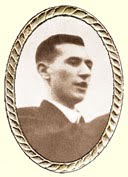
Father was born at Cuesmes on 14 July 1863, professed as a Redemptorist in 1881 and ordained to the priesthood in 1889.

For all those who knew him, the venerated priest would always be "the good Fr Couvreur." His goodness, consist-ing at one and the same time of natural cordiality and super-natural charity, mani-fested itself in his priestly life of ceaseless devotion during half a century.

He was devoted to the hard work of the Parish Missions and retreats as well as to persons of every condition, priests, religious, pious souls who were placed in great numbers under his direction. His solicitude extended also not only to the works and associations which he directed with such success but also to the Foreign Missions confided to the Redemptorist Belgian Province and of which he was for many years the procurator (that is he provided from Belgium for the physical needs of the Missions in the Congo, Canada, West Indies etc.)

To the merits he amassed over nearly sixty years of religious life, Fr Couvreur could add those of his great physical sufferings which permitted him to live the doctrine of union with the Victim Jesus, the proffered theme of his ascetic teaching.

He died at the Monastery of Brussels on 13 September, 1939 and his memory was held in honour by his confreres and the faithful who had lived under the influence of his exemplary piety and his comforting kindness. †
(From Father's mortuary card.)

Read more...

Wednesday, 12 August 2009

Rev Fr Maurice de Meulemeester, C.SS.R. (1879-1961)

Father de Meulemeester, who may be noted as a Necrologist par excellence, was born at Ghent, Flanders, on 30 June 1879. He was ordained to the diocesan priesthood in 1902 but quickly entered the Redemptorists and was professed in 1906. He soon became a professor of Church History and later General Archivist and director of the Redemptorist Historical Institute. He was also Provincial Archivist of the Belgium Province and director of the Redemptorist Oblates.

Father was a priest of great quality and a first class religious. After brilliant studies in Ghent and his ordination, he was private tutor to the Ghellinck Vaernewyck family who retained a devoted attachment to him until the end of his days, something he found a precious comfort.

Father de Meulemeester distinguished himself by an incessant spirit of work. Until his final days he was always glued to his desk where he composed a great number of biographies and histories of various religious congregations

As Archivist General he was very competent and composed a book on the origins of the Redemptorists and a monumental "General Bibliography of the Congregation of the Most Holy Redeemer." He also produced a very large number of choice articles for various historical reviews. The characteristic value of these studies was their objectivity. Father maintained an intransigent cult of the truth. He took for himself, and admitted also, no liberties with his subject. He sacrificed all to the truth and reserved no monopoly of truth to himself. He respected the historical opinions of others but he disclosed to no one his personal opinion neither would he let it be betrayed for any motive.

He was much focused on God. Of a very delicate conscience he lived through some painful spiritual periods but in the evening of his life he found great peace – the reward of the soul who had never doubted the infinite goodness of Our Lord.

He loved to immerse himself in prayer and had a marked taste for the contemplative life. All this, rather than stilting his active apostolate – which he exercised by many and long years of preaching – rather deepened and supernaturalized them. An example here would be his book "O My God, Trinity Whom I Adore," an admirable commentary on the prayer of Blessed Elizabeth of the Trinity.

Very attached to the traditions of his Order, he was most fervent at his Mass and Breviary, while cultivating a deep filial piety towards Our Blessed Lady. He desired to die on a day consecrated to Her, and it was indeed on a Saturday the She came to "pick" him for the Heavenly Garden while the Magnificat was being recited around his deathbed. This occurred at the Institute of Our Lady of the Presentation in Beveren (Wavre), Belgium on 15 April 1961. †
(After a memorial card)

Read more...

Monday, 10 August 2009

Sr Marie Madeleine of Jesus Host, O.SS.R. (1868-1933)

Sr Marie Madeleine was born at Poperinghe, Flanders, on 2 June, 1868. She was baptised Helen Marie Cornelia Coevoet. Entering the Redemptoristine Order she received her religious name which may seem a little odd to English speaking readers, but the name "Jesus Host" is reasonably commonly given to French nuns in honour of the Eucharistic Jesus. She died piously at the Redemptoristine Convent of Bruges in the 33rd year of her monastic life on 11 March, 1933. †

(From Sister's mortuary card.)

Read more...

Thursday, 6 August 2009

Rev Fr Louis Gallis, C.SS.R. (1822-1886)

Father Gallis was born at Antwerp, Flanders on 21 November, 1822. He was ordained to the secular priesthood in Malines on 6 June, 1862, and became a professor at the Minor Seminary of Hoogstraten. He was professed as a Redemptorist on 15 October 1853.

Father's apostolate was fertile, laborious and indefatigable. For 31 years his voice resounded throughout all of Flemish Belgium. God gave him remarkable apostolic gifts, a vibrant and sonorous voice, a popular style, courage in the face of difficulties and a great goodness towards poor sinners.

The edifying example of the Holy Family Confraternity in St Trond was his work. He was both the example and the joy of his confreres through his religious virtues. He died on the "battle-field" on 12 March 1886 in the Antwerp Monastery on the first day of the Mission. Death did not frighten him. He was prepared. He was buried at Hoboken.

"May his works praise him amidst the assemblies of the people." †

Read more...

Tuesday, 4 August 2009

Deacon Jozef Dupont, C.SS.R. (1893-1916)

Deacon Jozef Dupont was born at Antwerp, Flanders, on 31 January, 1893. He was professed as a Redemptorist on 29 September 1913. He died on the battlefield where he, like so many Flemish Redemptorists, served as a stretcher-bearer in World War I, on 20 December 1916. The beautiful image we reproduce here is from his mortuary card and represents him in his habit with the Red Cross arm-band. †

Read more...

Sunday, 2 August 2009

Deacon Maurice Hucq, C.SS.R. (1889-1917)

Deacon Maurice Hucq was born at Hingeon, near Brussels, Belgium, on 26 October 1889. He made his profession on 9 September 1907, and was ordained sub-deacon and deacon on 18 and 19 September 1915. He appeared to have been chosen for a spiritual career rich in benefits for the salvation of souls if one considers his gifts of mind and soul. Death came to cut off his work at its beginnings.

His soul, transported by a loving admiration for the Good and Beautiful, was entirely directed towards higher causes. As deacon he aspired to the priesthood in order to consecrate himself to bringing back to the Ark of the Catholic Church all the disunited.

As a Redemptorist he cherished the Redemptorist Congregation as his Mother and had at heart its beauty and grandeur, and even a prolonged absence from regularity (in the army) did nothing to cool his affection.

As a Belgian he loved his Fatherland to the point of signing up in the service of the wounded as a stretcher-bearer, without recoiling from even the sacrifice of his life. Jesus and Mary hastened to call unto themselves this faithful servant in order to crown him with the crown of perseverance.

Always held in tender affection by his family and well loved by his confreres, he left as his heritage his great and ardent aspirations and the example of his dedication to those noble causes so worthy of a magnanimous religious.

He was killed on the battlefield on Saturday, 1st December 1917 and buried at Hoogstade on 3 December. †

Read more...

About This Blog

Blog Archive

  © Blogger templates The Professional Template by Ourblogtemplates.com 2008

Back to TOP